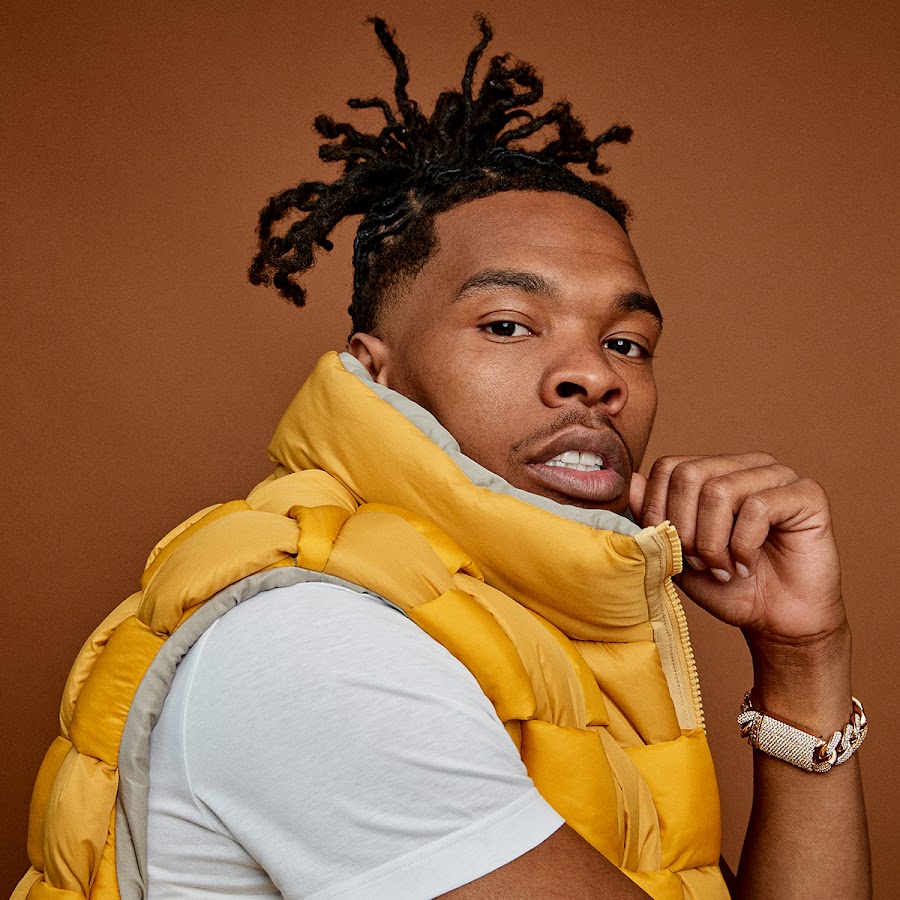
The city is home to one of the world’s most important musical ecosystems, and the 28-year-old is one of its biggest new stars
To hear his mother tell it, Dominique Jones always was a special child.
Before he was Lil Baby, Atlanta’s latest international rap superstar — and even before he was known only locally on the southwest side of his city as a formidable gambler and precocious teenage hustler — Dominique tended to be a quick study.
As a toddler, he was already helping his mother, Lashon, around the house, diligently folding laundry and straightening up the refrigerator without prompting. When Dominique was about 4, Lashon recalled when we spoke in 2019, she bought him a pair of in-line skates and was amazed when, without instruction or even a hand held for balance, her youngest child and only son had soon mastered his glide, tricks and all.
“I look up, and he’s out there skating backward,” Lashon said. “He looks at it, he sees it and he can do it.”
Dominique also revealed himself early on as a sponge for language. Before he could read, he was quoting the Bible, gaining a reputation as something of a local attraction among the Baptist preachers who visited the Black Southern hub of Atlanta to spread the word. “They would always look for him — ‘Where’s the young man that always gets so excited at church?’” Lashon has said. “Every time they came to town — ‘Where the little preacher man?’”
After those verses came music. Once, when Dominique was still a small child, Lashon was driving with her younger sister while listening the local Atlanta bass rapper Kilo Ali. “Turn it up a little bit,” Dominique demanded from his car seat, according to his mother’s memory.
After taking in the song for a moment, he called again toward the adults up front. “Turn it down now,” he said, considering what he had just heard. “That’s Kilo Ali?” Dominique asked, apparently knowing full well. “I went to school with him.”
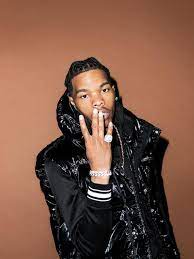
Lashon and her sister could only exchange confused glances. Dominique had never been to school a day in his life, and certainly not with an adult rapper from the nearby Bowen Homes projects. Yet somehow, the city’s sounds were already somewhere within him, as if through osmosis. “What’s your comeback after that?” Lashon said, reminiscing and still astonished. “We was blowed.”
Some two decades later, the story of Lil Baby, 27, whose triumphant new album, “It’s Only Me,” was released last Friday, is both an individual tale of roundabout stardom by an idiosyncratic artist and also a recurring pattern. As the latest in a long line of Atlanta rappers to take a raw Southern sound to the top of the pop charts — from ’90s and early 2000s industry trailblazers like Outkast, T.I., Jeezy and Gucci Mane to the streaming stars Future, Migos, 21 Savage, Young Thug, Gunna and Playboi Carti — Lil Baby could only have come from one place.
“Honestly, I think there’s something in the water,” he said in an interview over FaceTime last week. “It’s the upbringing, it’s the culture, it’s the things we see, the people we watched on TV. It’s a repeating cycle of greatness.”
That he and his forebears all happen to share geographic roots with Martin Luther King Jr. and the Ku Klux Klan, Uncle Remus and Spike Lee, “Gone With the Wind” and the Black spring-break party Freaknik is not a coincidence. It could only have been Atlanta.